Instagram Reels are judged fast. Viewers do not give your content much time to explain itself. In most cases, people decide within the first few seconds whether your Reel is worth watching, skipping, or forgetting.
That means a weak opening can destroy even a good piece of content. The problem is not always the topic. Often, the issue is how the Reel begins. If the opening feels slow, confusing, generic, or visually boring, attention is lost before your message starts.
Why The First 3 Seconds Matter So Much
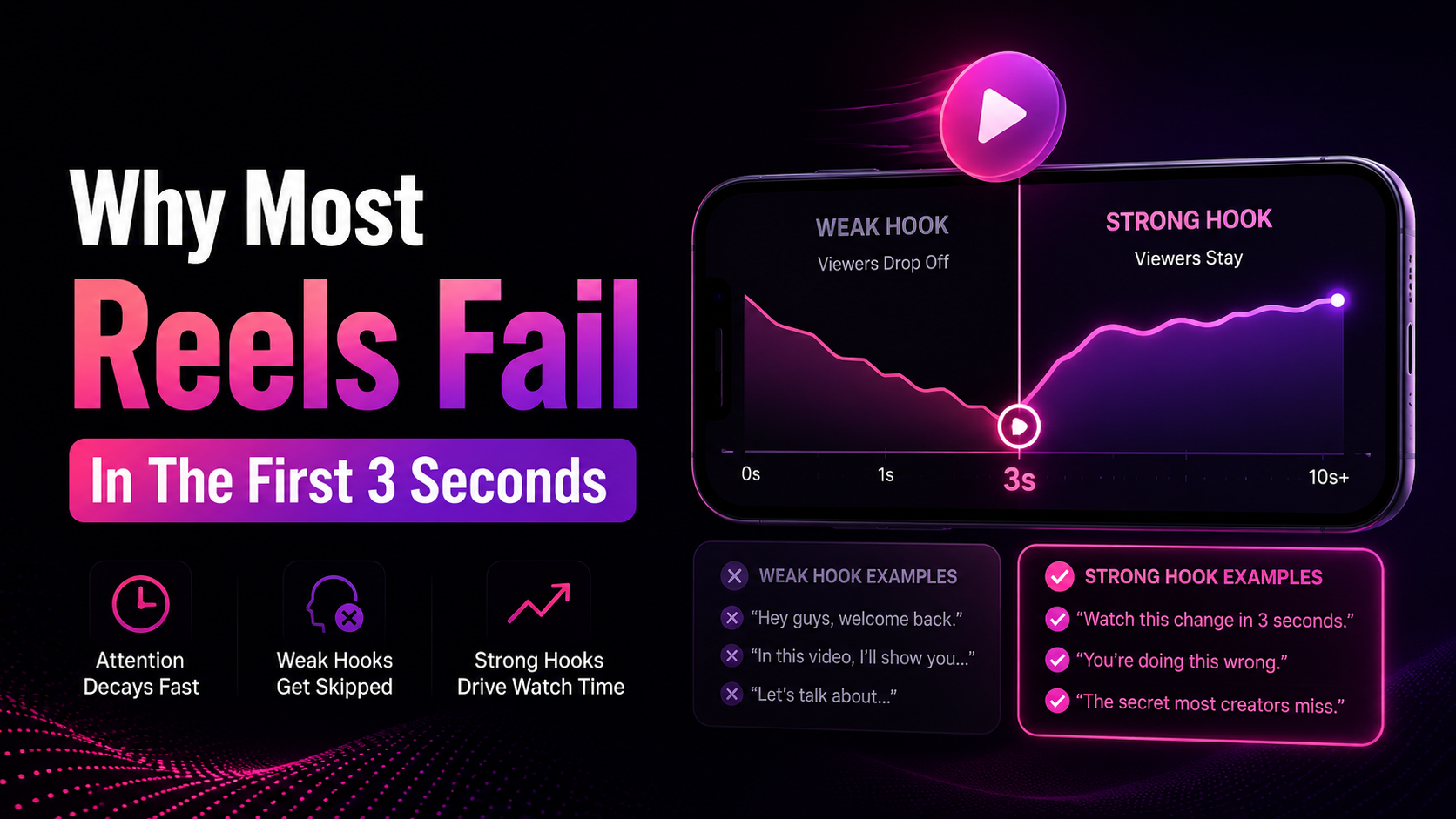
The first 3 seconds control retention. Retention tells platforms whether people are interested enough to keep watching. If too many people swipe away immediately, your Reel sends a weak signal. That reduces momentum before the content has a chance to spread.
A strong opening does not just grab attention. It creates a reason to stay. It gives the viewer curiosity, clarity, tension, emotion, or a fast payoff. Good openings make the audience think, “I need to see where this goes.”
If your Reel loses attention early, the rest of the content may never matter. Strong content still needs a strong entry point.
Common Reel Opening Mistakes
Most weak Reels fail for predictable reasons. The content may be useful, but the beginning does not give viewers a reason to stop scrolling.
- Starting too slowly before getting to the main point.
- Using generic intros that sound like every other creator.
- Showing low-energy visuals in the opening frame.
- Making the first line confusing or too broad.
- Explaining too much too early instead of building curiosity.
- Using weak camera framing or cluttered visuals that reduce clarity.
What Makes A Strong Hook
A good hook does not need to be dramatic. It needs to be clear, relevant, and emotionally active. It should create enough curiosity or value that the viewer wants to stay for the next few seconds.
1. Clear Promise
Tell the viewer what they are about to get. If the benefit is obvious, they are more likely to continue watching.
2. Curiosity Gap
A strong Reel often hints at useful or surprising information without revealing everything instantly. That gap encourages retention.
3. Specificity
Specific hooks usually perform better than vague ones. “Why your Reels get ignored” is stronger than “Let’s talk about content.”
4. Fast Relevance
Viewers want to know quickly whether a Reel is for them. If the opening instantly connects to their problem, they are more likely to stay.
Visual Reasons Reels Fail Early
The opening is not only about words. Visual design matters just as much. The first frame, movement, face, angle, and composition all influence whether a Reel feels interesting or easy to skip.
Some creators use a good hook line but still lose attention because the first frame looks static, unclear, or repetitive. If the visual side does not support the message, the Reel feels weaker.
- Low-energy framing with no movement or visual tension.
- Bad lighting or unclear subject focus.
- Text too small or too slow to read.
- No immediate scene change or attention signal.
- Starting with an unnecessary setup shot.
How To Improve Reel Retention
Improving retention starts with intentional design. You should think of the first 3 seconds as a testing area. Every small change matters: the hook wording, the first frame, the pacing, and the visual movement.
- Rewrite your opening line until it feels sharper and more specific.
- Make the first frame visually clean and easy to understand.
- Show the most interesting part earlier.
- Use text overlays that support the message immediately.
- Remove anything slow, generic, or unnecessary in the opening seconds.
Examples Of Better Reel Hooks
A better hook is often the difference between average retention and strong retention. The goal is not to sound clickbait. The goal is to create a stronger reason to keep watching.
Hook upgrade example
Weak: “Here are some Instagram tips.”
Better: “Most creators make this mistake before they even post the Reel.”
Hooks can be built around mistakes, surprising truths, quick lessons, audience pain points, or uncommon observations. The best hooks feel relevant, clear, and naturally connected to the actual content.
How ViralMint AI Helps Analyze Reels
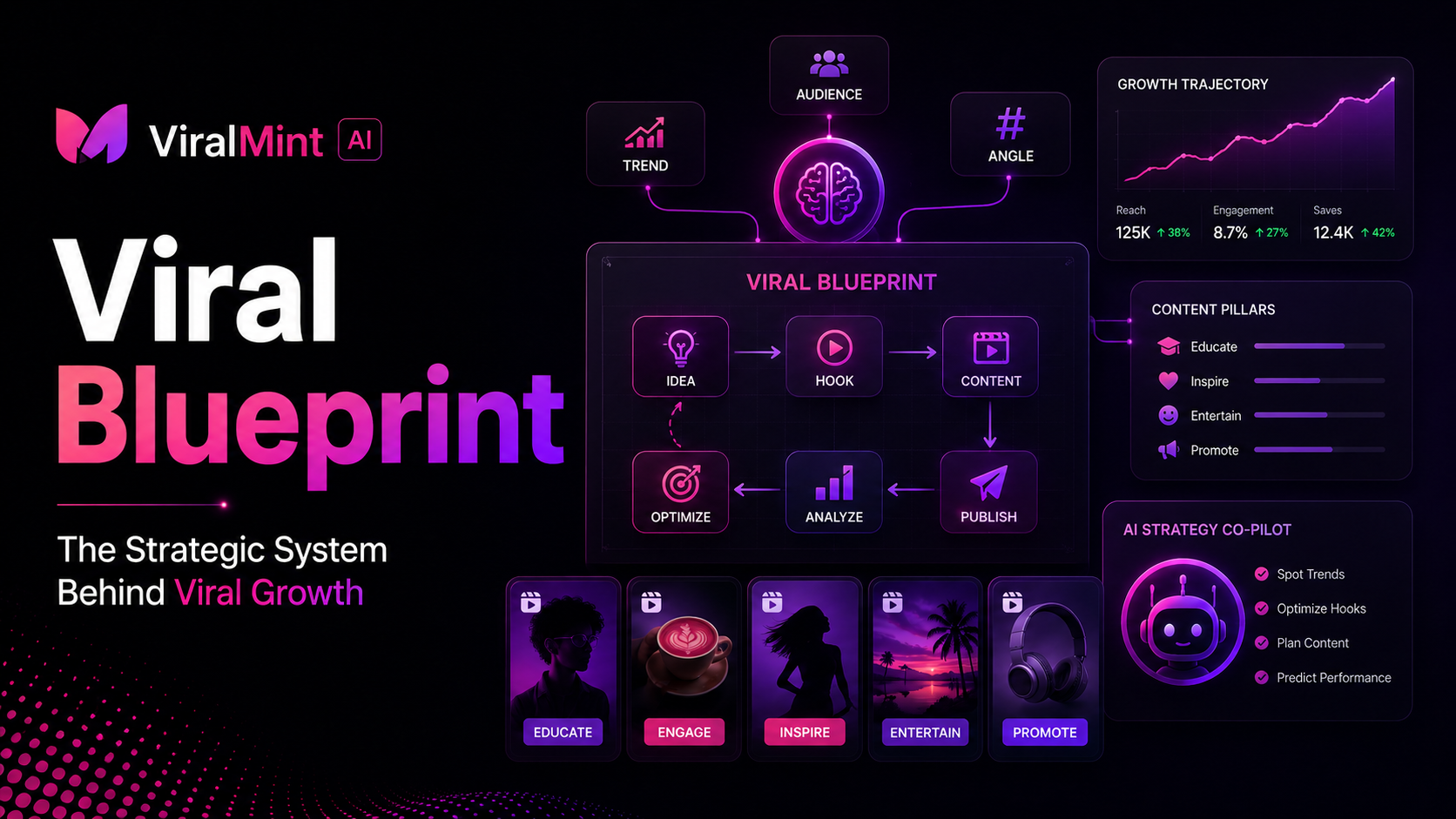
ViralMint AI is being built to help creators understand why content performs or fails. Instead of guessing, creators can use Reel Analyzer, Trend Intelligence, Profile Audit, and Viral Blueprint tools to identify weak spots and improve content decisions with more structure.
Reel Analyzer
Understand what is working in your Reels, where attention drops, and how to improve hooks, retention, and overall performance.
Explore Reel AnalyzerFinal Takeaway
Most Reels do not fail because the creator has no value to offer. They fail because the opening is not strong enough to hold attention. The first 3 seconds are where interest is either created or lost.
If you want stronger Reel performance, stop treating the opening like a small detail. Improve your hooks, sharpen your visuals, and make every second of the beginning work harder.
Want to keep learning?
Explore more creator growth guides and discover how better hooks, stronger trends, and smarter content analysis can improve your Instagram strategy.
Back To Blog