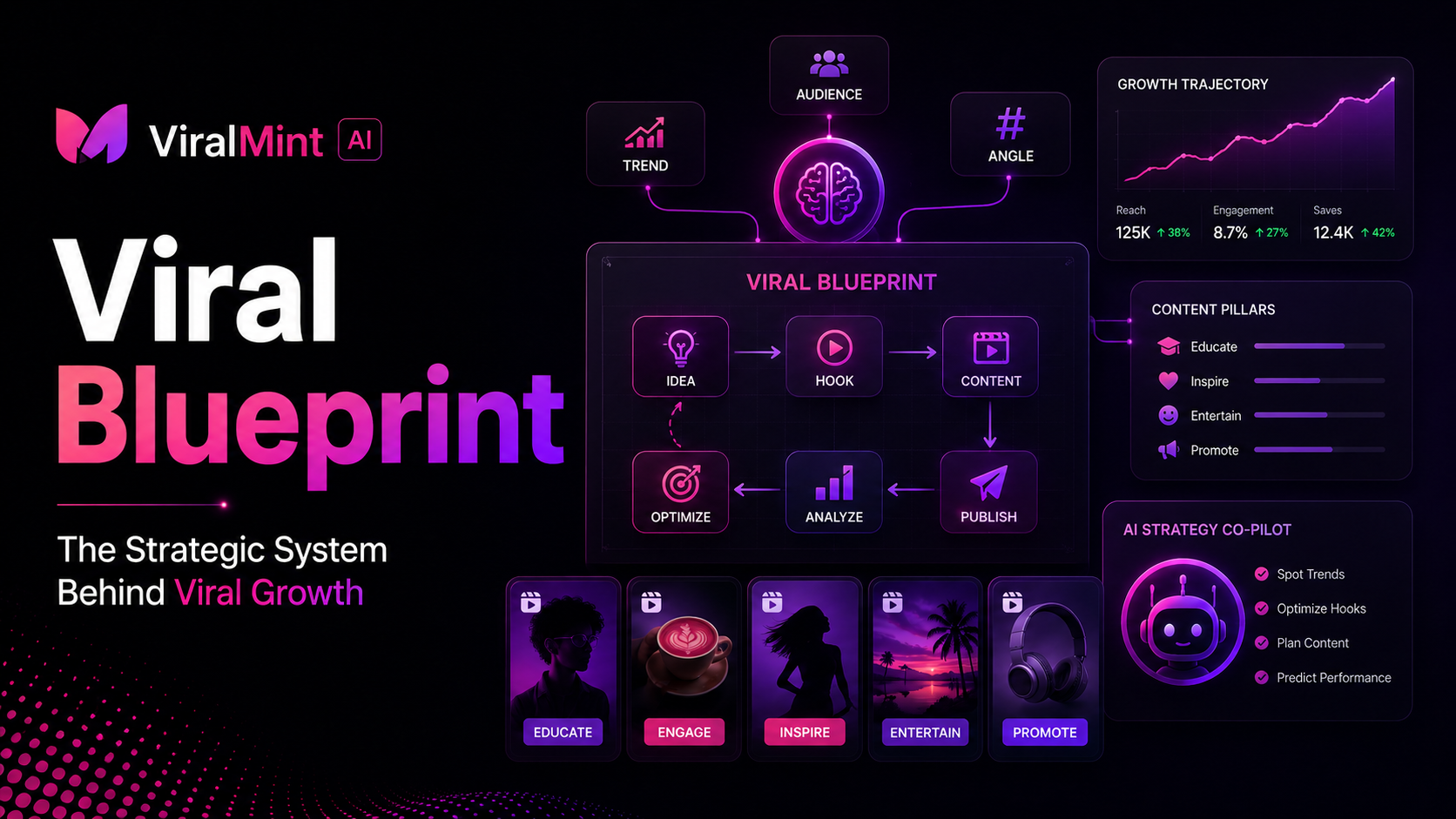
Reel analysis becomes powerful when you stop looking at content as a single post and start seeing it as a system. A viral blueprint is a breakdown of what made a Reel work, why people responded to it, and how that pattern can be adapted into new content ideas.
The goal is not to copy a viral Reel. The goal is to understand the structure behind it. When creators learn how to read hooks, pacing, audience intent, retention patterns, and emotional triggers, they can build better content with more intention.
What Is A Viral Blueprint?
A viral blueprint is a repeatable content framework created by studying a high-performing post or Reel. It identifies the key elements that helped the content perform well and turns those elements into a structure that can be reused in a fresh, original way.
A blueprint is not a script to copy. It is a strategic breakdown. It helps you understand what happened inside the content: how the viewer was pulled in, how attention was held, and why the audience cared enough to watch, save, share, or comment.
A viral blueprint is the strategy behind a successful Reel, separated from the exact creator, topic, and visuals so it can be adapted into new content.
Why Reel Analysis Matters
Many creators watch successful Reels and only notice surface-level details: the audio, the text overlay, the style, or the editing. But those are not always the real reasons the Reel worked.
Good analysis looks deeper. It asks what audience problem the Reel solved, what emotion it triggered, what made the opening strong, and why viewers continued watching. This is where real strategy begins.
- It helps you understand why content performed, not just that it performed.
- It reveals patterns you can test in your own niche.
- It stops you from copying trends blindly.
- It gives you a stronger foundation for new content ideas.
Step 1: Break Down The Hook
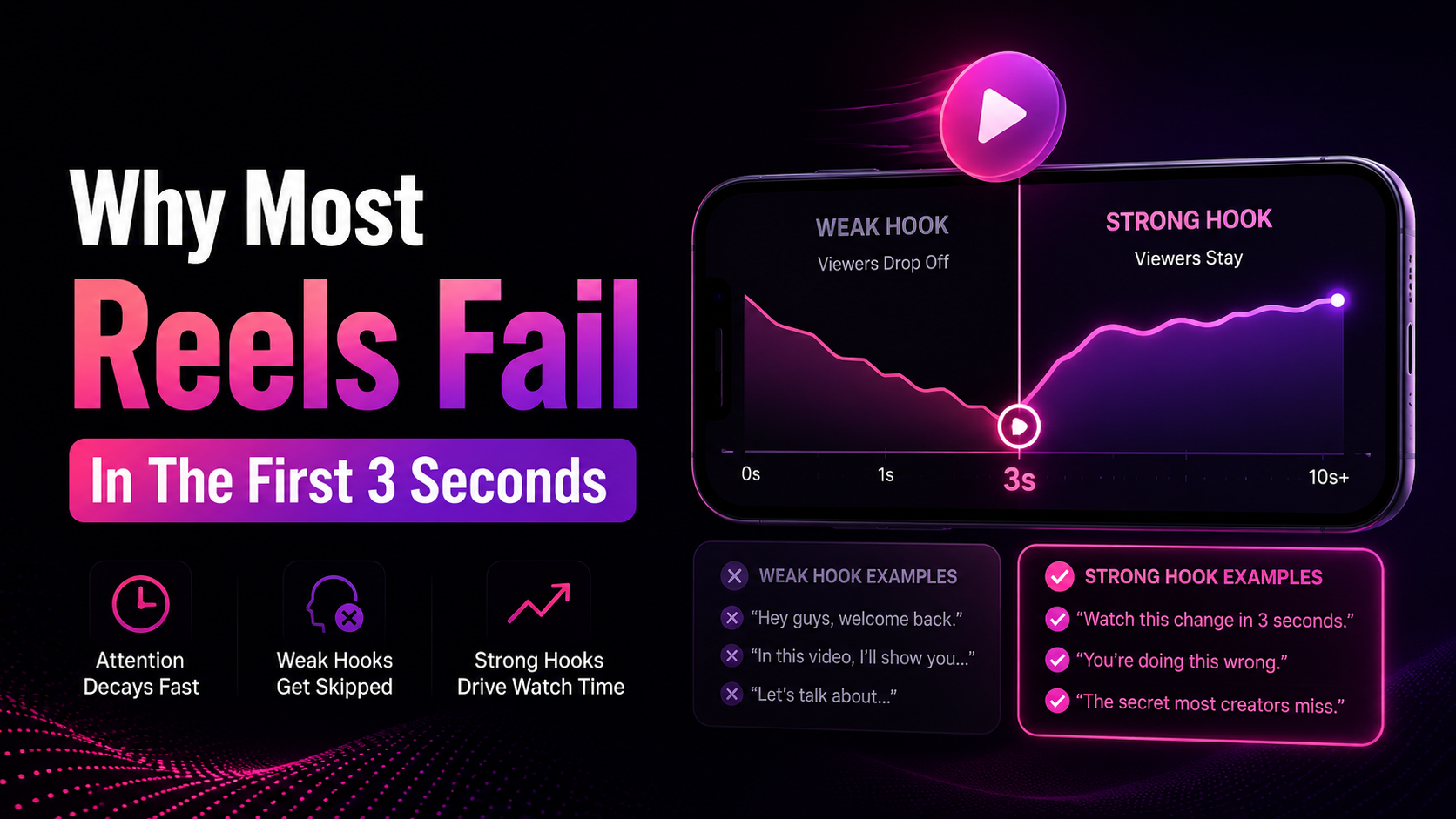
The hook is the first signal. It decides whether the viewer stops or keeps scrolling. When analyzing a Reel, start by studying how the creator opens the content.
A strong hook usually does one of four things: creates curiosity, identifies a painful problem, promises a clear benefit, or challenges a common belief.
Questions to ask:
- What does the first line make the viewer feel?
- Is the hook specific or generic?
- Does it speak to a clear audience problem?
- Does it create a reason to keep watching?
Step 2: Identify The Audience Problem
Most strong content connects to a real audience problem. The problem can be practical, emotional, social, or aspirational. If you cannot identify the problem behind a Reel, it becomes hard to understand why people cared.
For example, a Reel about “why your content is not growing” is not only about Instagram tips. It connects to frustration, confusion, and the desire for clarity. The deeper problem is what makes the content feel relevant.
Better analysis question
Do not only ask: “What is this Reel about?” Ask: “What problem, desire, or emotion made people care about this Reel?”
Step 3: Study The Retention Structure
Retention is about what keeps people watching after the hook. A Reel may start strong but lose viewers if the pacing, structure, or payoff is weak.
When building a blueprint, look at how the Reel moves from one point to the next. Strong Reels usually create a smooth chain of attention.
- The hook creates interest.
- The setup explains why the topic matters.
- The middle delivers useful or emotionally relevant points.
- The ending gives a clear takeaway or satisfying conclusion.
This structure keeps the Reel from feeling random. It gives the viewer a reason to continue because every part feels connected to the next.
Step 4: Analyze The Format
Format is the way the idea is packaged. Two creators can explain the same topic, but one format may be much easier to watch than the other.
Some formats work because they are fast. Some work because they are personal. Some work because they explain complex ideas simply. Understanding the format helps you adapt the idea without copying the exact content.
- List format: “3 mistakes creators make...”
- Story format: “I tried this for 30 days...”
- Contrarian format: “Everyone says this, but...”
- Before-and-after format: “Here is what changed...”
- Breakdown format: “Why this Reel worked...”
Step 5: Find The Emotional Trigger
People do not only share content because it is informative. They share content because it makes them feel something. A viral blueprint should identify the emotional trigger behind the Reel.
Some Reels perform because they make people feel understood. Others create surprise, urgency, confidence, curiosity, or relief. Emotional relevance is often what turns average information into content people remember.
A strong Reel usually has both value and emotion. Value makes it useful. Emotion makes it memorable.
Step 6: Separate The Pattern From The Post
This is the most important part of building a viral blueprint. You need to separate the pattern from the original post.
The original post may be about one niche, one creator, or one specific story. But the pattern behind it can often be used in many different niches. The key is to keep the structure while changing the topic, perspective, and examples.
Example pattern
Original idea: “Why your Reels fail in the first 3 seconds.”
Pattern: “Why your audience leaves before they see the value.”
Adaptation: This pattern can work for email marketing, YouTube intros, landing pages, or sales pages.
Step 7: Build New Content Variations
Once you understand the blueprint, create multiple variations. A good blueprint should generate more than one idea. This is how creators turn analysis into a content system.
- Keep the same content structure.
- Change the audience problem.
- Rewrite the hook in your own voice.
- Use examples from your niche.
- Test different angles and compare the response.
This approach helps creators stay original while still learning from what already works.
Common Blueprint Mistakes
A viral blueprint becomes weak when creators use it as a copying shortcut. The point is not to recreate someone else’s content. The point is to understand the deeper structure and apply it with originality.
- Copying the exact hook without changing the angle.
- Using the same visual format without understanding why it worked.
- Ignoring audience fit.
- Turning every viral post into the same type of content.
- Forgetting to add personal experience or unique perspective.
A Simple Viral Blueprint Framework
You can use this simple framework when analyzing any high-performing Reel. It keeps the process clean and prevents you from focusing only on surface-level details.
- Hook: What made people stop?
- Audience problem: What pain, desire, or question did it target?
- Format: How was the idea packaged?
- Retention: What kept people watching?
- Emotion: What feeling made it memorable?
- Takeaway: What did viewers learn or feel by the end?
- Adaptation: How can the structure become a fresh idea?
Final Takeaway
Turning Reel analysis into a viral blueprint is about learning from structure, not copying content. The best creators study what works, understand why it works, and then adapt the pattern into something original.
A strong blueprint helps creators create with more confidence. Instead of guessing what to post next, they can build ideas from proven patterns, audience signals, and clearer creative direction.
Want to keep learning?
Explore more creator growth guides on trends, hooks, profile audits, and smarter Instagram content strategy.
Back To Blog